
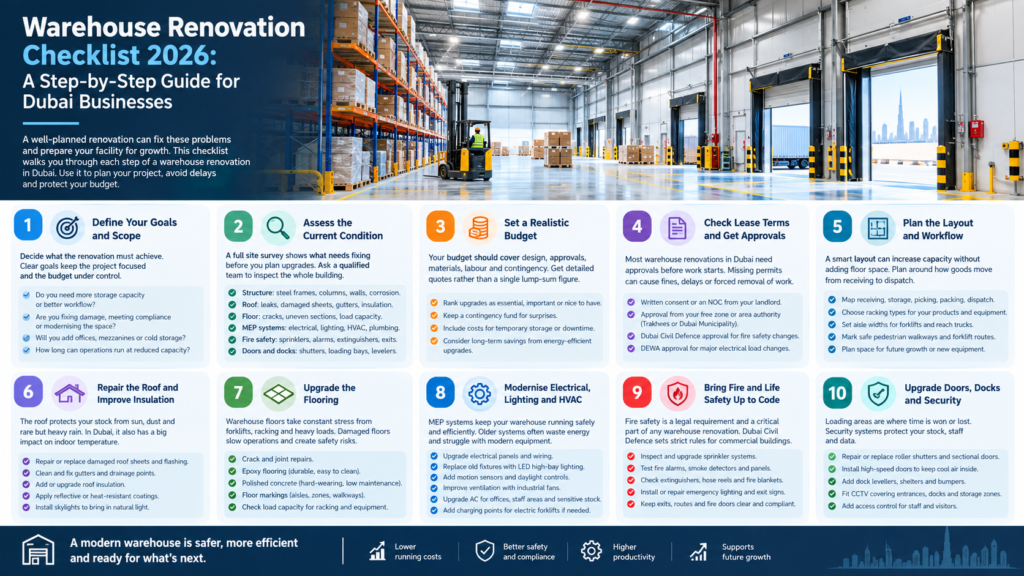
A warehouse is the engine of many Dubai businesses. When it becomes outdated, costs rise and operations slow down. Leaking roofs, poor lighting and cramped layouts all affect productivity and safety. A well-planned renovation can fix these problems and prepare your facility for growth. This checklist walks you through each step of a warehouse renovation in Dubai. Use it to plan your project, avoid delays and protect your budget.
Why Renovate Your Warehouse in Dubai?
Dubai is a major logistics and trade hub for the region. Warehouses here work hard in extreme heat, dust and humidity. Over time, roofs, floors and cooling systems wear out.
Common reasons to renovate include:
- Rising energy bills from poor insulation and old lighting.
- Worn or cracked floors that slow forklifts and damage goods.
- Outdated fire safety systems that no longer meet Civil Defence rules.
- Layouts that no longer suit your stock, equipment or workflow.
- Plans to add office space, cold storage or new racking.
Step 1: Define Your Goals and Scope
Start by deciding what the renovation must achieve. Clear goals keep the project focused and the budget under control.
Ask yourself these questions:
- Do you need more storage capacity or better workflow?
- Are you fixing damage, meeting compliance or modernising the space?
- Will you add offices, mezzanines or temperature-controlled areas?
- How long can operations run at reduced capacity?
Write your answers into a simple project brief. Share it with your contractor at the first meeting.
Step 2: Assess the Current Condition
A full site survey shows what needs fixing before you plan upgrades. Ask a qualified team to inspect the whole building.
Check these areas:
- Structure: Steel frames, columns, walls and signs of corrosion.
- Roof: Leaks, damaged sheets, gutters and insulation.
- Floor: Cracks, uneven sections and load capacity.
- MEP systems: Electrical panels, lighting, HVAC, ventilation and plumbing.
- Fire safety: Sprinklers, alarms, extinguishers and emergency exits.
- Doors and docks: Roller shutters, loading bays and dock levellers.
Record every issue with photos and notes. This becomes the base for your scope of work.
Step 3: Set a Realistic Budget
Your budget should cover design, approvals, materials, labour and contingency. Get detailed quotes rather than a single lump-sum figure.
Budget tips:
- Rank upgrades as essential, important or nice to have.
- Keep a contingency fund for surprises found during work.
- Include costs for temporary storage or downtime if needed.
- Consider long-term savings from energy-efficient upgrades.
A clear budget helps you make faster decisions during the project.
Step 4: Check Lease Terms and Get Approvals
Most warehouse renovations in Dubai need approvals before work starts. Missing permits can cause fines, delays or forced removal of work.
Your approval checklist may include:
- Written consent or an NOC from your landlord.
- Approval from your free zone or area authority, such as Trakhees or Dubai Municipality.
- Dubai Civil Defence approval for fire safety changes.
- DEWA approval for major electrical load changes.
Requirements vary by location and scope. An experienced contractor can prepare drawings and manage submissions for you.
Step 5: Plan the Layout and Workflow
A smart layout can increase capacity without adding floor space. Plan around how goods move from receiving to dispatch.
Layout checklist:
- Map receiving, storage, picking, packing and dispatch zones.
- Choose racking types that suit your products and equipment.
- Set aisle widths for your forklifts and reach trucks.
- Mark safe pedestrian walkways and forklift routes.
- Plan space for future growth or new equipment.
Good flow reduces travel time, errors and accidents.
Step 6: Repair the Roof and Improve Insulation
The roof protects your stock from sun, dust and rare but heavy rain. In Dubai, it also has a big impact on indoor temperature.
Roof upgrades to consider:
- Repair or replace damaged roof sheets and flashing.
- Clean and fix gutters and drainage points.
- Add or upgrade roof insulation to reduce heat gain.
- Apply reflective or heat-resistant roof coatings.
- Install skylights to bring in natural light.
Better insulation can cut cooling loads and make the space safer for staff.
Step 7: Upgrade the Flooring
Warehouse floors take constant stress from forklifts, racking and heavy loads. Damaged floors slow operations and create safety risks.
Flooring options include:
- Crack and joint repairs: Fix damage before it spreads.
- Epoxy flooring: Durable, easy to clean and resistant to chemicals.
- Polished concrete: Hard-wearing with a low-maintenance finish.
- Floor markings: Clear lines for aisles, zones and walkways.
Check that the floor can carry your racking and equipment loads.
Step 8: Modernise Electrical, Lighting and HVAC
MEP systems keep your warehouse running safely and efficiently. Older systems often waste energy and struggle with modern equipment.
MEP checklist:
- Upgrade electrical panels and wiring for current and future loads.
- Replace old fixtures with LED high-bay lighting.
- Add motion sensors and daylight controls.
- Improve ventilation with industrial fans or extraction systems.
- Upgrade AC for offices, staff areas and sensitive stock.
- Add charging points for electric forklifts if needed.
Efficient lighting and cooling usually deliver the fastest savings on running costs.
Step 9: Bring Fire and Life Safety Up to Code
Fire safety is a legal requirement and a critical part of any warehouse renovation. Dubai Civil Defence sets strict rules for commercial and industrial buildings.
Fire safety checklist:
- Inspect and upgrade sprinkler systems.
- Test fire alarms, smoke detectors and control panels.
- Check extinguishers, hose reels and fire blankets.
- Install or repair emergency lighting and exit signs.
- Keep exits, routes and fire doors clear and compliant.
Always use a Civil Defence-approved contractor for fire system work.
Step 10: Upgrade Doors, Docks and Security
Loading areas are where time is won or lost. Security systems protect your stock, staff and data.
Upgrades to consider:
- Repair or replace roller shutters and sectional doors.
- Install high-speed doors to keep cool air inside.
- Add dock levellers, shelters and bumpers.
- Fit CCTV covering entrances, docks and storage zones.
- Add access control for staff and visitors.
These upgrades improve security and speed up loading and unloading.
Step 11: Improve Offices and Staff Facilities
Comfortable facilities help you attract and keep reliable staff. Many warehouses also need better office space for admin teams.
Ideas include:
- Mezzanine offices that use unused height.
- Upgraded washrooms and changing areas.
- Shaded, cooled rest areas and pantries.
- Prayer rooms and first-aid stations.
If you are adding office space, see our guide to office renovation in Dubai.
Step 12: Schedule Work to Limit Disruption
Few businesses can close their warehouse for weeks. Careful scheduling keeps goods moving during the renovation.
Scheduling tips:
- Split the project into phases by zone.
- Carry out noisy or dusty work at night or on weekends.
- Move stock to temporary storage where needed.
- Agree a clear timeline and weekly progress updates.
Share the schedule with your team, suppliers and customers early.
Step 13: Choose the Right Renovation Contractor
The right contractor makes the whole process smoother. Look for proven experience with commercial and industrial projects in Dubai.
Contractor checklist:
- Valid trade licence and relevant approvals.
- Experience with warehouse structures, MEP and fire systems.
- Ability to manage permits and authority submissions.
- Clear, itemised quotes and realistic timelines.
- Strong references and a portfolio of similar projects.
No Sweat Maintenance provides warehouse renovation services in Dubai from planning to handover. The team handles civil works, MEP upgrades and finishing under one roof.
Step 14: Final Inspection and Handover
Before signing off, inspect every part of the work carefully. Test all systems and check that approvals are complete.
Handover checklist:
- Walk through the site with your contractor.
- Test lighting, HVAC, doors, docks and fire systems.
- Collect warranties, manuals and as-built drawings.
- Confirm completion certificates from the relevant authorities.
- Agree a maintenance plan to protect your investment.
An annual maintenance contract helps keep your renovated warehouse in top condition.
Plan Your Warehouse Renovation With Confidence
A warehouse renovation is a major investment, but it pays off in efficiency, safety and lower costs. Following this checklist helps you plan each stage and avoid common mistakes.
Ready to upgrade your facility? Get a warehouse renovation quote from No Sweat Maintenance today.
Frequently Asked Questions
How long does a warehouse renovation take in Dubai?
It depends on size and scope. Small upgrades may take a few weeks, while full renovations can take several months. Approvals can add extra time.
Do I need a permit to renovate a warehouse in Dubai?
Yes, most renovations need approval. You may need a landlord NOC, authority permits and Dubai Civil Defence approval for fire safety changes.
Can I keep my warehouse running during renovation?
Yes, in most cases. Work can be phased by zone or scheduled at night and on weekends.
What should I check before renovating a warehouse?
Check the structure, roof, floor, MEP systems, fire safety and loading areas. A full site survey helps you set the right scope and budget.
Which warehouse upgrades save the most money?
Roof insulation, LED lighting and efficient cooling usually deliver the biggest savings. High-speed doors also help reduce cooling losses.
What is the best flooring for a warehouse?
Epoxy flooring and polished concrete are both popular choices. The best option depends on your loads, traffic and cleaning needs.
Do fire safety systems need upgrading during renovation?
Often, yes. Layout or racking changes may require new sprinklers, alarms or exits to meet Civil Defence rules.
How do I choose a warehouse renovation contractor in Dubai?
Choose a licensed contractor with industrial experience and strong references. They should manage permits, MEP work and fire safety upgrades.

Leave a Reply