
7 Things to Check Before Signing a Maintenance Contract in Dubai (2026)
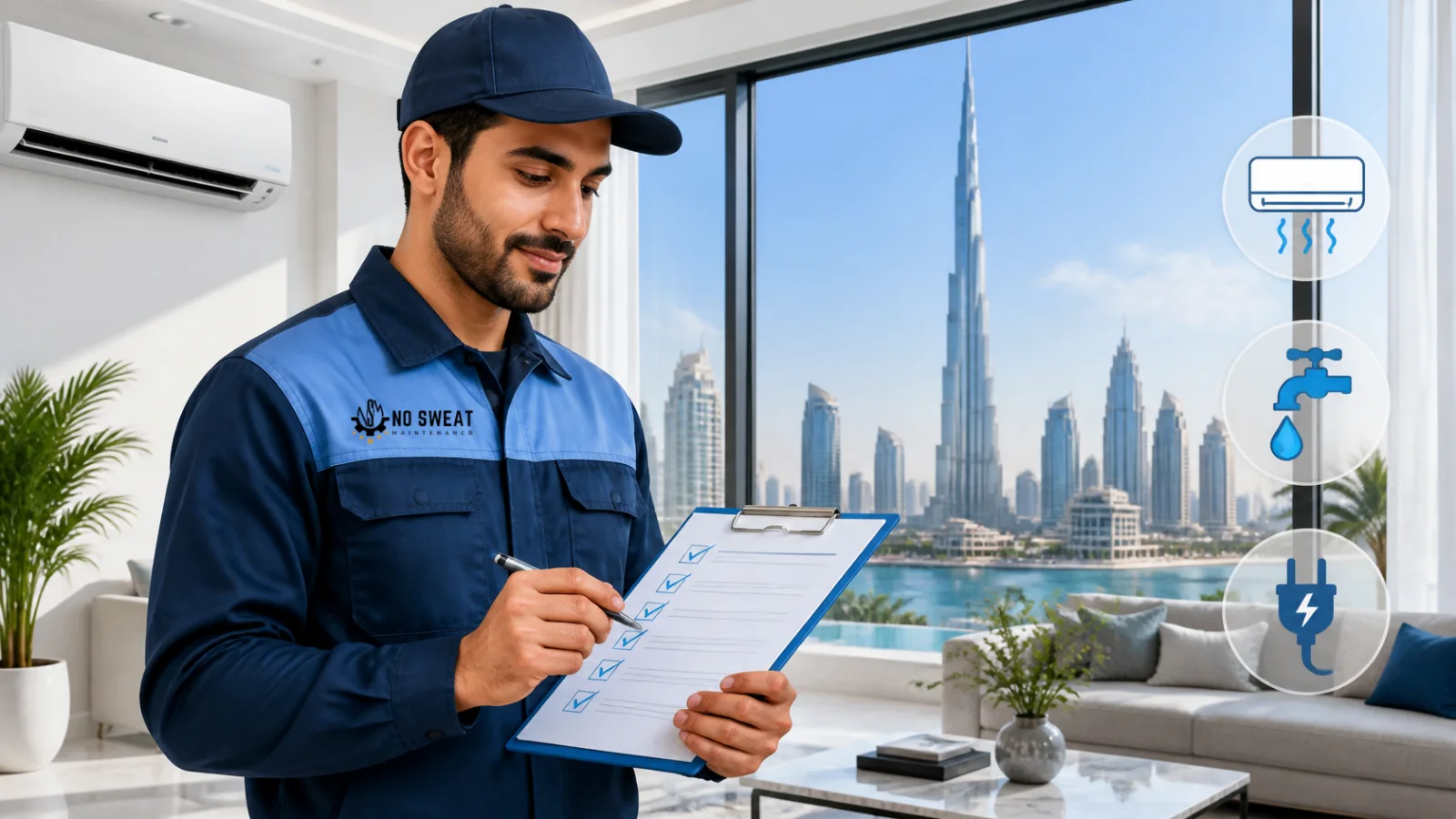
A maintenance contract should make property ownership easier. A good one catches small faults before they become expensive repairs, gives you a predictable annual cost and means someone answers the phone when the AC fails in August. A poorly written one can leave you paying for services you never receive and arguing over what was “included”.
Whether you own a villa, manage an apartment building or run a commercial unit, check these seven things before you sign an annual maintenance contract (AMC) in Dubai.
1. Is the Company Properly Licensed and Approved?
Start with the basics. A maintenance provider should hold a valid trade licence in Dubai with an activity that matches the services in your contract. Ask to see a copy and check that it is current.
Some systems carry extra requirements. Fire alarm and firefighting systems, for example, are regulated in Dubai, and in many buildings they must be maintained by contractors approved by the relevant authority. If your property has these systems, ask whether the company holds the necessary approvals. Don’t assume a general maintenance licence covers everything.
Ask for: a trade licence copy, relevant approvals or certifications, and references from similar properties.
2. Is the Scope of Work Clearly Defined?
Most AMC disputes come from vague scope. “Full maintenance” can mean very different things depending on who wrote the contract.
Check that the contract lists:
- Which systems and assets are covered: AC units, plumbing, electrical, pumps, water heaters, lighting, fire systems and so on
- How many units or locations are included
- What is excluded: many contracts exclude major replacements, vandalism, tenant damage or pre-existing faults
- Which tasks are routine and which are billed separately
If something matters to you, make sure it is written down. Verbal promises don’t help in a dispute.
3. How Often Will Preventive Maintenance Visits Happen?
The value of an AMC lies in preventive work, not just fixing breakdowns. In Dubai’s climate, AC systems and water systems work hard year-round, so a schedule matters.
Check the contract for:
- Number of scheduled visits per year for each system (quarterly is common for many systems, but needs vary)
- A checklist of what each visit covers
- Service reports after each visit, so you have a record of work done and issues found
If the contract only promises to “attend when called”, you are buying a repair service, not a maintenance plan.
4. What Are the Response Times and Service Levels?
An AMC is only useful if the provider turns up when it matters. Look for a clear service level agreement (SLA) that states:
- Response time for emergencies (such as flooding, power faults or AC failure) and for routine calls
- Availability outside normal hours, including weekends and public holidays
- How to raise a request: phone, WhatsApp, portal or email, and who responds
- What happens if the SLA is missed, such as credits or escalation
Be wary of promises like “24/7 support” with no defined response time. Round-the-clock availability means little if a technician arrives two days later.
5. Are Parts, Materials and Labour Included or Extra?
This is where “cheap” contracts often become expensive. Contracts generally fall into three types:
- Labour only: you pay separately for every part
- Labour plus consumables: minor items such as filters or belts are included
- Comprehensive: labour and most parts are included, usually with exclusions for major components
None of these is automatically better. The right choice depends on your property and risk appetite. What matters is that you know which one you are buying. Ask how replacement parts are priced, whether you approve costs before work starts, and whether there is a spending limit above which approval is required.
6. What Insurance and Liability Cover Does the Provider Carry?
Maintenance work involves working at height, with electricity, water and heavy equipment, and mistakes can damage property or injure people. Before you sign, ask:
- Does the company carry third-party liability insurance, and for what level of cover?
- Are technicians covered by workmen’s compensation or equivalent insurance?
- Who is liable for damage caused during maintenance work?
- Are technicians trained and qualified for the systems they service?
A reputable provider will answer these questions without hesitation and put the details in writing.
7. What Are the Term, Renewal, Termination and Payment Conditions?
The commercial terms matter as much as the technical ones. Read these clauses carefully:
- Contract duration and start date
- Auto-renewal: does the contract renew automatically, and how much notice do you need to cancel?
- Termination rights: can you leave if service levels are not met, and are there penalties?
- Payment schedule: upfront, quarterly or monthly, and what happens if payment is late
- Price changes: can the provider raise fees mid-term or at renewal, and under what conditions?
- Handover and records: will you receive maintenance logs and asset records if you end the contract?
If any clause is unclear, ask for it to be rewritten in plain language before you sign. For larger contracts, consider asking a legal professional to review it.
Red Flags to Watch For
- A price far below every other quote, with no explanation
- No written scope, or a scope that says “as required”
- No defined response times
- Pressure to sign immediately
- Reluctance to share a licence, insurance details or references
- No service reports or documentation
Final Thoughts
A good maintenance contract is clear about what is covered, how often work is done, how fast problems are fixed and what it costs. Spending an hour on these seven checks can save you months of frustration and unexpected bills.
Looking for a maintenance partner in Dubai? Explore No Sweat Maintenance’s annual maintenance contracts or get in touch to discuss a plan for your villa, building or commercial property.
Frequently Asked Questions
1. What is an annual maintenance contract (AMC) in Dubai?
An AMC is an agreement under which a maintenance company services a property’s systems, such as AC, plumbing and electrical, for a fixed annual fee. It usually includes scheduled preventive visits and, depending on the contract, repairs and emergency call-outs.
2. What should be included in a maintenance contract?
A good contract should list the systems covered, the number and frequency of visits, response times, what is and isn’t included in parts and labour, insurance and liability terms, the contract duration and the payment and termination conditions.
3. How can I check if a maintenance company in Dubai is legitimate?
Ask for a valid Dubai trade licence with a relevant activity, any approvals needed for regulated systems such as fire safety, proof of insurance and references from similar clients. A reputable company will provide these readily.
4. Are spare parts included in an AMC?
It depends on the contract. Some cover labour only, some include minor consumables and some cover most parts with exclusions for major components. Always check the contract and ask how replacement parts are priced and approved.
5. Can I cancel a maintenance contract before it ends?
That depends on the termination clause. Many contracts require written notice and may include penalties or lock-in periods, and some renew automatically. Check these terms before signing, and ask whether you can exit if service levels are not met.
6. Is an AMC better than paying for repairs as needed?
For many properties, yes. Preventive maintenance can reduce breakdowns and emergency costs, and a fixed fee makes budgeting easier. However, it only pays off if the contract is clear and the provider delivers on the schedule and response times.
Leave a Reply